Speaking of Republican plots to ensure the party a permanent majority through gerrymandering of state legislatures and House districts, they've seemed pretty scary to most of us—they haven't pretended not to be doing it, and we've seen plenty of evidence of success in the disproportions, at all levels, between how many Republicans vote in a given contest and how many seat they win—sometimes grossly unfair, as in 2012, when Republicans won a comfortable 33-seat majority in the House with just 46% of the vote, or these crucial and grotesque results for local legislatures in the 2018 election
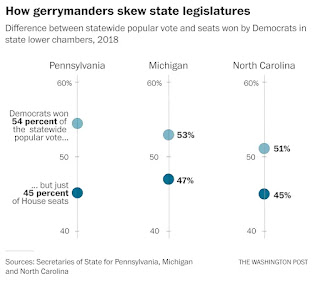
As Eric Levitz put it in New York's Intelligencer rubric on Christmas Day,
The Democratic House majority was supposed to die in redistricting. For months now, pundits and political forecasters have predicted that Republicans could win back the House next year without flipping a single voter. After all, the GOP controls far more state governments than the Democrats, and this is a post-Census year, when states redraw their congressional maps. Republicans boast sole authority over the boundaries of 193 congressional districts, while Democrats command just 94. Given the slimness of Nancy Pelosi’s majority, several analyses projected that GOP cartographers would generate enough new, safe “red” seats to retake the House through gerrymandering alone.
But now, Levitz continued, Democrats seemed to be doing "weirdly well" in the redistricting process: