Sunday, January 10, 2016

Oprea Buffa

Update: Hi MBRU readers! Make yourselves at home!

Jean-Léon Gérôme, The Marabout: In the Harem Bath (1889). Via AlonzaKaim.com.
Megan Grace Oprea at The Federalist setting us straight on Orientalism:
Edward Said popularized this term in his 1978 post-colonial work Orientalism. According to many of my colleagues, an orientalist is a person who writes about the Middle East from a “western perspective,” which is when one does not unquestioningly support and affirm Middle Eastern and Islamic culture. This does not mean that westerners are excluded from writing about the Middle East and Islam. A westerner can do so successfully so long as their research is void of criticism. 
Oh, no, dear me, what "colleagues" (at the UT-Austin French department?) told you that? Orientalism does not present itself with a harsh critique but an affectionate smile. Orientalism adores the East, its fragrant and languorous beauty. Orientalism wants to put a harem wall around the whole delicious continent! Orientalists don't criticize the East, for heaven's sake, what for? They're only children, after all, really, though undoubtedly hot-tempered and given to knives and garrotes and poison, and also astonishingly sexy. Orientalists love Orientals the way Donald Trump loves women: he would never say anything unkind about them, unless they did something ugly and disturbed his fantasy about how dreamily acquiescent and mysteriously lovely they are.

Orientalists just think Orientals shouldn't write about anything. Why trouble their lovely, empty little heads? It'll just put frown lines on those sleek complexions.

Anyway, you don't have to worry about anybody calling you an Orientalist, with your record. They'll just call you a racist without the complications.

Saturday, January 9, 2016

Vowels of compassion

Some Americans, New York, December 2015. Photo by Esther Merono, Huffington Post.
This is about something that came up over at Alicublog over the course of the week involving linguistics, where I thought it might sort of be my duty to say something more boring than would be appropriate for the comment section there, as always the Best Party Ever, where you really want to look your nattiest at all times.

Also, while I may not actually have all that much to say, at least I'm going to spell it right, which is more than can be said for M.G. Oprea at the Federalist, whose post

How You Pronounce ‘Muslim’ Says A Lot About Your Politics


Ever notice how those on the Left pronounce ‘Muslim’ like ‘Mooss-lim’? Here’s what it means.
was the topic of discussion:
This pronunciation is code for “I’m not Islamaphobic.”
(That's how rightists spell "islamophobic", to show their contempt for traditional rules of word-formation, where a compound with an Ancient Greek stem like φόβια always uses the thematic vowel -o-,  still true in modern Greek incidentally.)

Friday, January 8, 2016

Abstract celebrations and concrete hungers

Drawing by Jim Benton.
Stats:

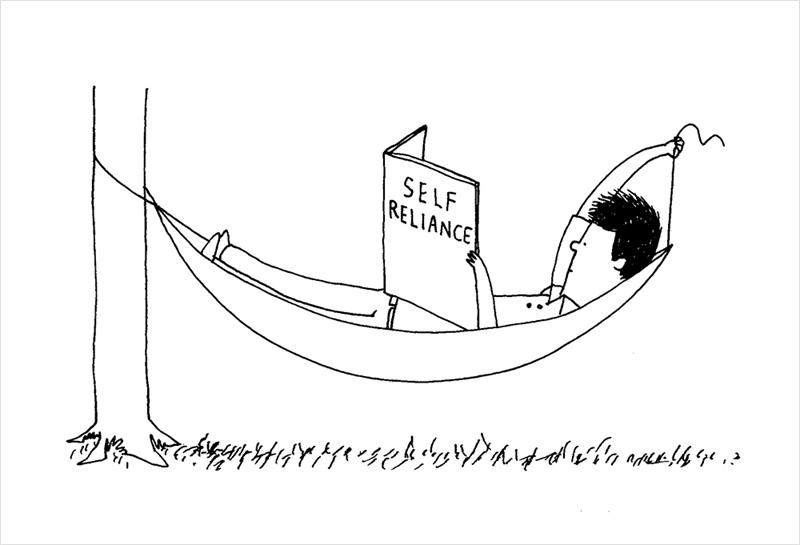
David Brooks ("The Self-Reliant Generation", January 8 2016) hits his 139th career use of "amazing/amazingly":
Last month Fox News released a poll showing Hillary Clinton leading Bernie Sanders in Iowa by 14 points. But the amazing part of the poll was the generation gap. Among likely caucusgoers under 45, Sanders was crushing Clinton 56 to 34 percent. Among the older voters, Clinton was leading 59 to 24.
Shorter:
Millennials overwhelmingly want a Democrat to win the White House in 2016, but that doesn't mean they're liberals. There are no signs of a progressive counterculture as there were in earlier generations, with their tie-dye, patchouli, and Donovan records. Millennials have lived through financial crisis, family instability, and government dysfunction, so they cling to their jobs and don't move or get married or even have sex very often. An abstract celebration of creative transformation and a concrete hunger for order. They don't belong to religions. Only 32% say America is the greatest country on earth. They will all have midlife crises.
Product placement:

Thursday, January 7, 2016

Can Rubio stand up to Putin?


And the Fix is in—Chris Cilizza, the voice of conventional wisdom, spreading the idée reçue on Rubio's height:
I was mistaken citing Wikipedia, which doesn't offer an estimate (I think I got the error from Allie Jones at Gawker); the 5'10" figure is from his Google profile, and it's not footnoted.

It's new, too, from the campaign; he's called himself 5'9" in the past (that Washington Times reference— “5’ 9” — 5’ 9” and a half, maybe, on a good day.”—is from August 2013). I did the same thing myself, for many years, I'm sorry to say, as a person of the 5'8" persuasion, although I have never run for president.

But he's also been wearing those elevator shoes [recte: Cuban heels, thanks, Monsieur B] since at least 2012, when he started running for president, as we learned from Genius of Despair in November of that year:

Wednesday, January 6, 2016

Pierre Boulez

Will you help little Marco make a difference?


Little Marco wants to make a difference. But can he, stuck as he is in the ghetto of Capitol Hill, subject to the peer pressure of his shiftless, ill-educated neighbors? Or is he doomed to waste his life in insignificance like the other legislators?

You can help little Marco escape the trap and become an important person! You can help him move up Pennsylvania Avenue to the right side of the tracks where he can realize his full human potential, if you just send him all your money! Write that check today!

Tuesday, January 5, 2016

Don't stultify my fabric, bro!

Buster Keaton in Our Hospitality (1923).
1.

David Brooks on "The Age of Small Terror":
On New Year’s Eve some friends and family members had a drink at a bar in Tel Aviv. The next day a gunman shot up the place, killing two people and wounding at least five. When I heard about the shooting I was horrified, of course, but there was no special emotion caused by the proximity 16 hours before.
Friends and family members of whom? Where was there no special emotion? Whose proximity? He's not actually trying to hide the fact that he has friends and relatives in Tel Aviv, he's more trying to hide the fact that he exists at all, as a specific human being with a body and a family and particular emotions of his own. General David Brooks and his general emotions are focused on the big picture:
These days, we all live at risk of random terror, whether we are in Paris, San Bernardino, Boston or Fort Hood.
I.e., wherever there are Muslims, apparently, but I'll get back to that.

Monday, January 4, 2016

Civil Disobedience

Back in the day, when they had guns it used to be regarded as distinctly uncivil. Wonder when that changed, and what caused it? Image (May 2 1967) via CineSource Magazine.
It's David French day here at Rectification HQ:
Deranged militiamen spoiling for a fight against the federal government make for good copy, but what if they’re right? What if the government viciously and unjustly prosecuted a rancher family so as to drive them from their land? Then protest, including civil disobedience, would be not just understandable but moral, and maybe even necessary.
You are so right, and don't even talk about the guns they're toting. I mean is Oregon an open-carry state or isn't it? (It is.) So what part of nonviolent civil disobedience says you're supposed to be unarmed? I mean think how effective Rosa Parks would have been if she'd been packing when she got on that bus.


National Review fails: Star Wars

BB8. Via JamFactory.

So the 19-year-old and I went to see The Force Awakens at last, and—without spoilers, just in case there's anybody left who hasn't seen it—there are some things I'd like to report. First, that it's really good in exactly that way you'd hope it might be; as some fool at the National Review (Nordlinger? I can't find it) was complaining, it's the same movie as the one from the seventies. Or rather it's not the same movie at all, but it is the same myth, or a new phase of the same myth, under profound transformations like the different phases of the Oedipus myth in the famous chart of Claude Lévi-Strauss:

Sunday, January 3, 2016

Things to be grateful for

If not for the Second Amendment, we could have ended up with a Grover Norquist who spoke English.


Lawless

American avocets, Malheur Lake, Oregon, photo by Barbara Wheeler/USFWS, among the vast numbers of species that depend on the lake for their continued existence, in the habitat the wingnuts torched (to hide evidence of their deer poaching).

From a Times editorial:
In recent years, Congress and the Pentagon have stood in the way of President Obama’s goal of shutting down the prison at Guantánamo Bay, Cuba. The legislative hurdles have been predictable in a Republican-led Congress that so often opposes Mr. Obama’s initiatives reflexively. The stalling at the Defense Department, where officials have used every bureaucratic trick in the book to slow down the release of inmates, is startling, though, and basically amounts to insubordination.
I've been around this issue before, particularly on the insubordination of the civilian head of Defense, former secretary Chuck Hagel, who was fired in part for working against administration policy to block the release of Guantánamo detainees, along with publicly disagreeing with the commander-in-chief and in line with Senator McCain in favor of more aggressive US action in Afghanistan and (against the Assad regime) in Syria, and against Obama's proposed cuts to the Pentagon budget (even as the Brogressive Caucus weirdly picked Hagel as some kind of promoter of peace in opposition to Obama the warmonger).

Friday, January 1, 2016

Happy National Review Year

St. Jean-Baptiste Vianney (1786-1859), curé d'Ars, who wrote: "We cannot dwell upon the conduct of the Jews, my dear people, without being struck with amazement. These very people had waited for God for four thousand years, they had prayed much because of the great desire they had to receive Him, and yet when He came, He could not find a single person to give Him the poorest lodging. The all-powerful God was obliged to make His dwelling with the animals. And yet, my dear people, I find in the conduct of the Jews, criminal as it was, not a subject for explanations, but a theme for the condemnation of the conduct of the majority of Christians. We can see that the Jews had formed an idea of their Redeemer which did not conform with the state of austerity in which He appeared. It seemed as if they could not persuade themselves that this could indeed be He who was to be their Saviour; St. Paul tells us very clearly that if the Jews had recognised Him as God, they would never have put Him to death. There is, then, some small excuse for the Jews [Well, that's very white of you, Father, as they say]. But what excuse can we make, my dear brethren, for the coldness and the contempt which we [i.e., Christians] show towards Jesus Christ?
In the Kathryn Jean Lopez interview technique, as I understand it, there is no actual interview; the subject emails her a list of prepared things she wants to say and then Lopez writes a set of questions for each, to make it look as if an interview had taken place. What I like to do (well, what I did once, anyway) is just print (some of) the questions without answers, and then wonder what drugs she's on.

Today's is from an interview with Kathleen Beckman, author of Praying for Priests: A Mission for the New Evangelization (Manchester, NH: Sophia Institute Press, 2014):

Thursday, December 31, 2015

Happy New Year!


Effluenza

Image via CleveScene.
Why the Tamir Rice killers walk, along with so many others:
Even with indictments, juries will remain reluctant to convict police officers absent evidence of malice, said Eugene O’Donnell, a former officer and prosecutor who now teaches at the John Jay College of Criminal Justice in New York. “Tremendous incompetence, the worst kind of training, disregard for people is really not enough,” he said. “You’re going to have to go beyond that because the police are different.”
I get some sympathy out of that for prosecutor McGinty in Cleveland, looking at this Times article about the legal barriers that exist in our states to the prosecution of homicidal police. Yes, it's kind of disgusting the way the charade of the grand jury was staged to make it seem as if he was looking toward the possibility of justice, but there wouldn't have been any in the end in any event. If a killer is a cop, "depraved indifference to human life" isn't an adequate reason to put him in jail. "Give this unfortunate young officer a break," says the law, "he's a piece of shit, but is that a reason to punish him? He's suffering from effluenza."

New Year Schadenfreude

Is Netanyahu a secret Muslim? Image via CNN.

A couple of years ago (November 2013), in the context of one of those posts I was doing at the time trying to explain why the NSA surveillance operations affecting US persons, unacceptable as they might be if they actually existed, were definitely not the same thing as the SS or the Stasi, I wrote:
The Obama administration is considerably less Pinochet-like than [the Nixon-era programs]. They would plainly prefer that whoever they're spying on should not have a clue that it's happening, a sign that what they're after isn't fear or obedience at all, but intelligence. And above all they don't want the people being spied on to know who they are, even at the price of letting us believe, following the Snowden document dumps, that it's all of us. Am I confident nobody's spying on me? Yes. Am I confident nobody's spying on harmless dissidents, cheating girlfriends, or Binyamin Netanyahu? No, but I sure hope they're tapping Netanyahu.
So I'm naturally pretty pleased to learn from this Adam Entous and Danny Yadron article (Wall Street Journal this side of the paywall) that they decided to take my advice and even got some real stuff for a change, catching the Israeli government suborning legislators and lobbyists in the effort to sabotage Obama's Iran policy:

Babalú!

Santería practice on church steps, image via Ghost Lounge.
Trump plays the Santería card on Ted Cruz!
"You gotta remember. In all fairness, to the best of my knowledge, not too many evangelicals come out of Cuba, OK? Just remember that, OK? Just remember," he told the crowd in Council Bluffs, Iowa. "When you're casting your ballot, remember."
No indeed! What kind of religion comes out of Cuba? Something they don't hear much about in Council Bluffs, I bet!

Tuesday, December 29, 2015

Brooks of the Year in Review

David Brooks in 1776, via Publius Maximus.

Twice a week or so for I don't know how long, probably three or four years, practically every Tuesday and Friday, I turn to the Times opinion section (nowadays generally on my phone, first thing in the morning during funding credits on NPR) to see what crimes against journalism and the English language David Brooks has committed that morning, and try to figure out something to say about it, or through it, or under it, whether with a Shorter (often with a lot of commentary) or a fully realized essay, a parody, or even once in a while a for-reals poem, as happened last January, when I got the impression from a column that he'd been trying out an online dating service (OK Cupid), and having a fairly humiliating time of it, and found myself moved for a change by a genuine compassion, together with a couple of really terrific rhymes.

I don't do this for every Douthat column, or every dithyramb by Jonah Goldberg, or anybody else (to say nothing of torturing myself the way fellow Brooksologist Driftglass does watching the Sunday morning shows every week), just Brooks, and I'm not completely sure why. One thing is it's a kind of exercise, and I sit down to it the way a high-tone jazz pianist might start a practice day with a little Bach (one prelude and fugue from WTC) and a little riff...

Monday, December 28, 2015

Moar Clinton

Hillary Clinton and Marian Wright Edelman at a Children's Defense Fund event, 2013. Photo by Alex Brandon/AP.
That Amy Chozick story about young Hillary Rodham as an undercover agent of change in Alabama in the summer of 1972, infiltrating the system of "segregation academies" set up in the South to evade civil rights law, contains an amusing example of rhetorical electric slide:
D. Taylor Flowers, the chairman of the board of Houston Academy, whose father was a founding board member, was in the ninth grade at the school (which locals call “H.A.,” jokingly saying it stands for “holy Anglo”) when Mrs. Clinton visited. “I've heard the story, and I don’t think Hillary Clinton made it up,” he said over lunch in Dothan.
The school was founded to prepare students for college, not as a segregation academy, Mr. Flowers said. But, he added, “I would be disingenuous if I said integration didn’t have anything to do with” parents’ enrolling their children in Houston Academy. “Integration was a huge social change for us.”

Sunday, December 27, 2015

Jon Swift Memorial Roundup 2015

Batocchio Super in Resistencia, Argentina.

This year's Jon Swift Memorial Roundup (named for the great late blogger Al Weisel/Modest Jon Swift the Reasonable Conservative who started the tradition), the annual blogfeast in which bloggers large and famous and small and obscure, mostly the latter, volunteer their best posts of the year for the delectation of readers everywhere, is up at the Vagabond Scholar, as ever offering a lot of great reading from blogfriends old and new. Everybody gets a trophy!

It's a wonderful custom, and curator Batocchio, who keeps it up, deserves applause and thanks, from writers and readers everywhere. So go there!

Cross-posted at No More Mister Nice Blog.

Saturday, December 26, 2015

Birth of a Hack


Christopher J. Scalia, a "writer in Washington, D.C."*, reviewing Leo Damrosch's 2015 biography Eternity's Sunrise: The Imaginative World of William Blake for The Weekly Standard, mostly sticks to discussing the book, but ventures at one point into a little analysis of the poetry of the book's notoriously gnarly subject, sticking with the Songs of Innocence to play it safe:
The poems are deceptively simple. Consider this stanza from "The Shepherd."
How sweet is the Shepherd's sweet lot!

From the morn to the evening he strays:

He shall follow his sheep all the day,

And his tongue shall be filled with praise

The light rhythm and idyllic setting are subtly undercut by the diction. Why is the shepherd following his sheep? A good shepherd might walk behind them—but to direct, not follow, them. Nor should shepherds "stray." The collection teems with such ironizing details.
Not so, in fact. "Any man may make a shepherd," Sidney's Emigrant's Journal advised its readers thinking of possible careers in Australia in 1848, "the duty is so light.... The shepherd follows the sheep all day, just keeping within sight and no more, letting them go wherever they please, except into thick scrubs. When they try to go into these places, he then heads them back, by walking round them if they are old sheep, or he whistles, and they face right about like soldiers; but if they are lambs, he is obliged to send his dog round them..."